Discoveries
The unusual, as the official pages tell it
Nothing invented. The surprises already sit on the fact sheet, on NASA Science, and in the captions of Voyager, Hubble and Webb stills.
Official surprises, from official pages and official captions.
A 97.77-degree tilt
Agreed by the fact sheet and NASA Science, with a 21-year polar winter and a year told as 30,685.400 days and as 30,687.
The first telescope planet
13 March 1781, William Herschel, originally taken for a comet or a star, and almost named Georgium Sidus.
A pale visible disk
Voyager’s official as-the-eye-would-see-it composite, beside NASA Science’s wording about the 1986 flyby, and a 2006 Hubble dark spot.
Colder than Neptune, in some places
NASA Science: a minimum temperature of 49 K, even colder than Neptune in some places.
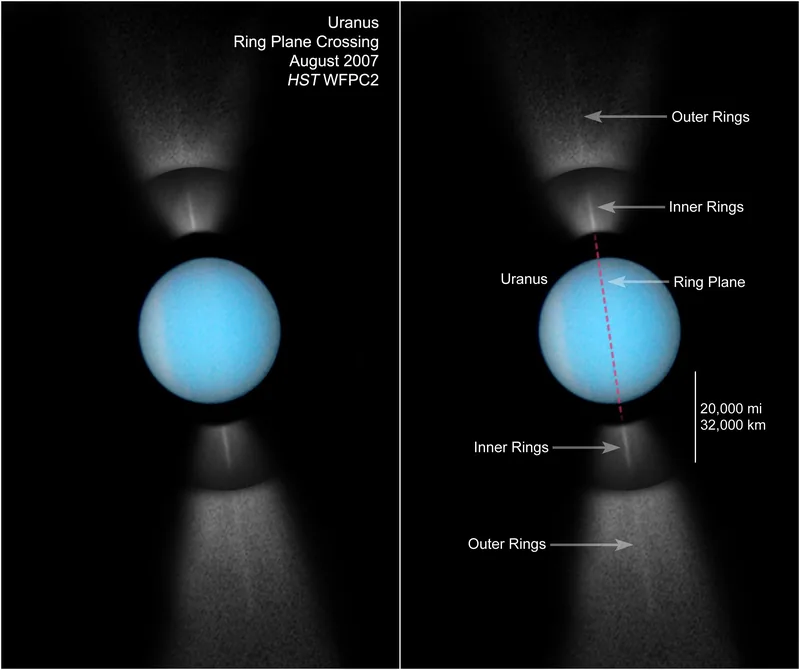
28 moons, 13 rings
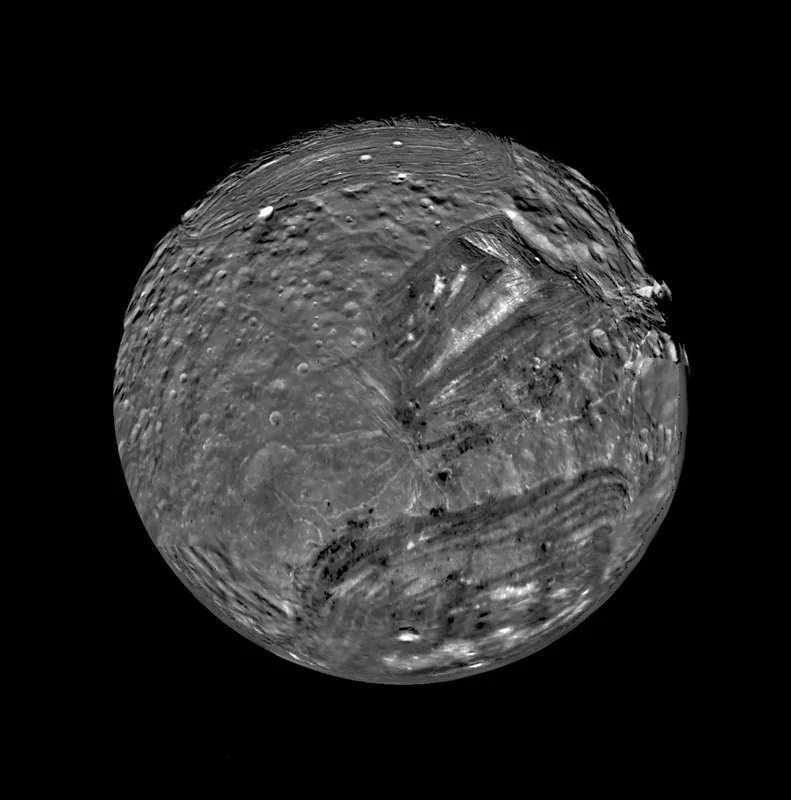
Matching official moon counts, Shakespeare and Pope, and a Voyager mosaic of Miranda.
Enjoyed a 97.77-degree tilt, a 21-year winter, and a Voyager disk that is not the same as a Webb ring portrait?
No pop-ups. No intrusive advertising. Just interesting stuff. A little support helps the next planets.im site get built.